
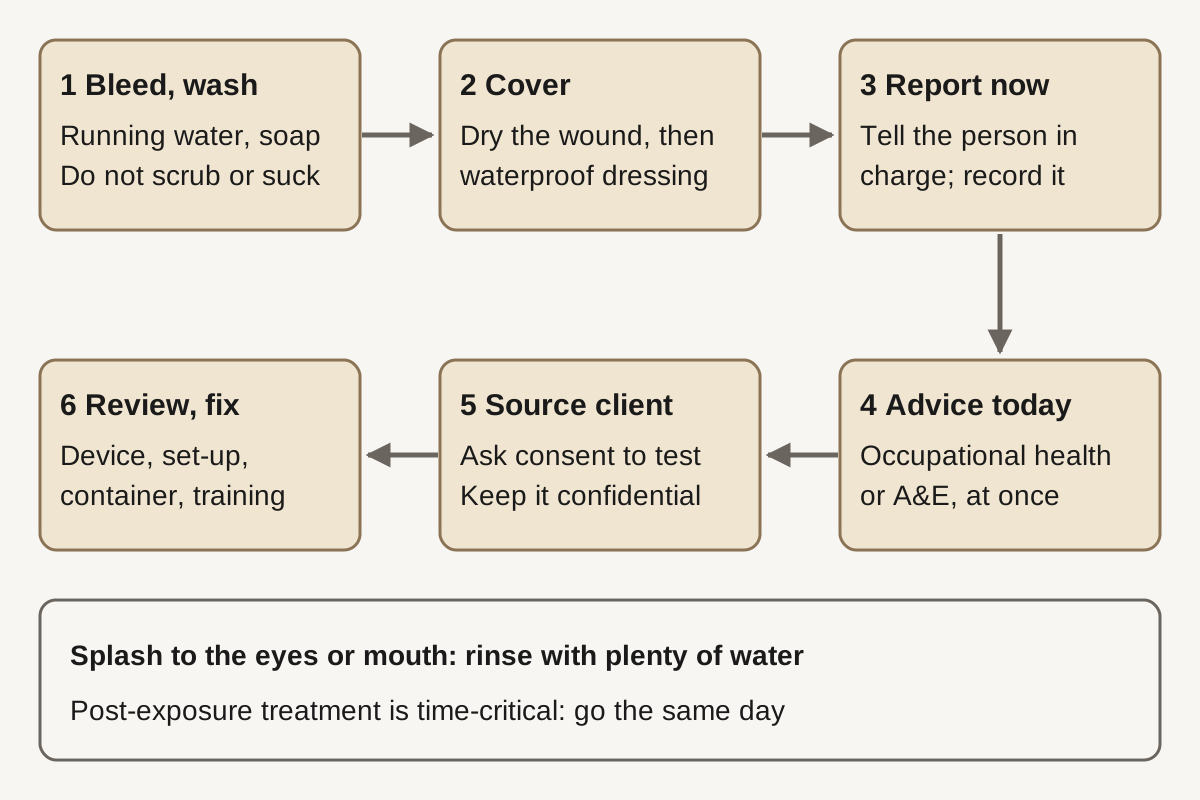
- 1Stop the procedure safely. Encourage the wound to bleed gently, ideally under running water. Do not suck it and do not scrub it.
- 2Wash it with running water and plenty of soap, dry it and cover it with a waterproof dressing.
- 3For a splash to the eyes or mouth, rinse with plenty of water straight away. If you wear contact lenses, rinse, remove the lenses, then rinse again.
- 4Report it at once to the person responsible for the clinic, and record it: who was injured, when and where, the device, the stage of the procedure, and the source client if known.
- 5Get urgent medical advice the same day, without waiting for the end of the list. Go to your occupational health provider or, if you have none, the nearest emergency department. They will assess the risk of hepatitis B, hepatitis C and HIV. Treatment after exposure works best when it starts early. UK guidance from the British Association for Sexual Health and HIV (BASHH) says HIV PEP should start as soon as possible, preferably within 24 hours, and is not recommended after 72 hours.
- 6If the source client is known, explain what has happened and ask for consent to a blood test. They are free to refuse. Results are confidential. The client is given their own results, and they are shared only with the clinician advising you.
- 7Review what happened and change the process, not just the person: the device, how the work was set up, where the container sits, the training.
The rest of this lesson
Sharps, spillages and clinical waste
- What the law requires
- Handling sharps
- Sharps containers
- Hepatitis B immunisation
- Reporting to HSE
- Spillages
- Waste streams
- Bags, storage and paperwork
- Common mistakes
About 19 minutes to read in full, with a knowledge check at the end.
In the full course
7 lessons, about 47 minutes of reading, 17 pictures and diagrams
A knowledge check after every lesson (43 questions, each answer explained) and a 25-question final assessment. Pass it with every lesson complete and your certificate is issued the same moment, with a QR code anyone can verify. Every future update to the course is included.
- The CPD Group Approved Provider #779331
- 14 days to cancel until you start the course
- A real person replies within 48 hours